
Begin With Your Routine
Imagine an ordinary day rather than a special occasion. Would you swim before breakfast, cool off after work, or spend the afternoon beside the water? The answer helps determine the priorities of the layout.
List the things you would use regularly. Then separate them from features that are appealing but less essential. This gives a design conversation a useful starting point.
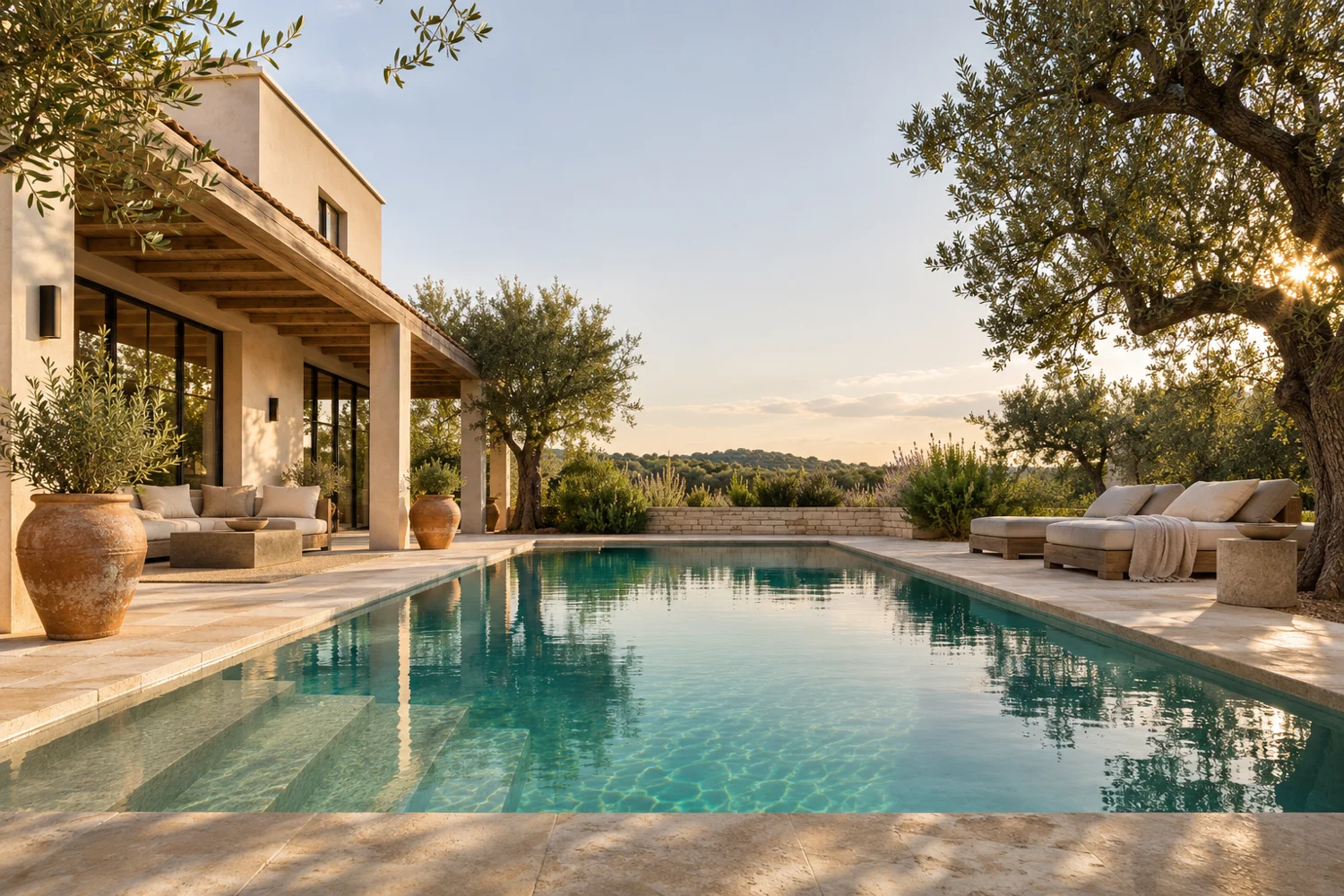
Understand The Site
Consider access, existing trees, slope, sun, privacy, and views from inside the house. A pool belongs within a larger setting. Boundaries, utilities, drainage, and local requirements will also influence what is possible.
A site-specific assessment is needed before treating a preferred concept as buildable. Photographs and an existing survey can help begin that conversation.
Choose Materials Thoughtfully
A finish should do more than look good in a small sample. Think about heat, wet surfaces, cleaning, weather exposure, and how the material feels next to the architecture of your home.
Compare a restrained group of complementary materials together. Pool tile, coping, paving, walls, and furniture all contribute to the overall impression.
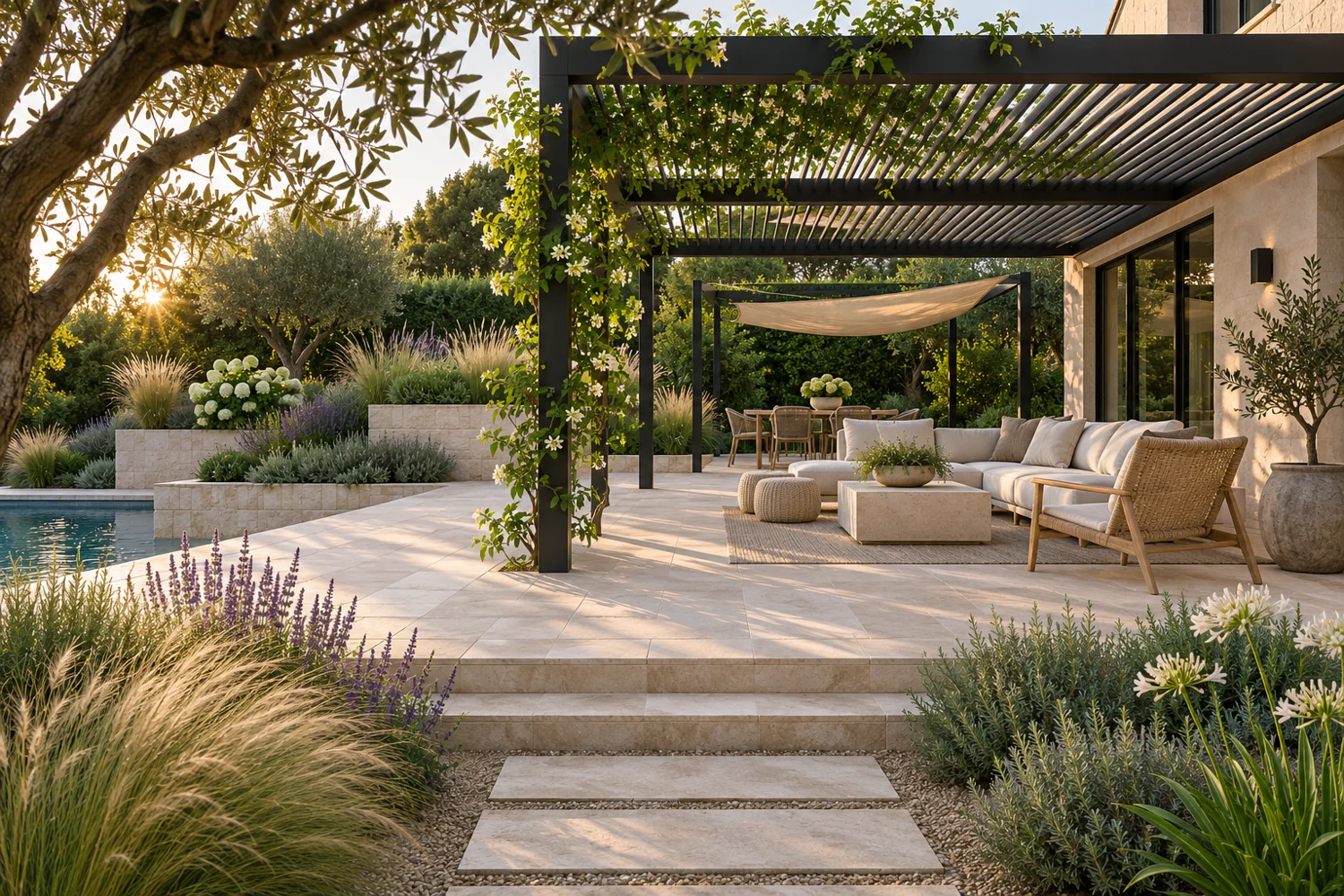
Make Room For Shade And Gathering
Allow enough room for furniture and for people to move around it. A dining table needs space for occupied chairs; a lounger needs a comfortable route past it. Shade should fall where it is useful at the times you expect to be outside.
Cooking areas, structures, lighting, and planting are easier to coordinate before construction begins, even when the project will be completed in phases.
Prepare For The Next Step
Bring a few reference images, a list of priorities, any available property information, and a realistic working budget. Be ready to discuss timing and the decisions that matter most.
This guide offers general planning ideas. Engineering, safety, permits, and installation details require project-specific advice from the appropriate professionals.
Start Your Conversation